
Key points to remember
- The dress code sets the tone: black tie, white tie, business chic, or smart casual do not call for the same level of formality.
- A floor-length dress remains a safe choice, but a jumpsuit, suit, or midi dress can be just as elegant depending on the context.
- The choice of fabrics makes all the difference: satin, silk, velvet, lace, chiffon, or tulle immediately create a more dressed-up look.
- Deep colors such as black, midnight blue, navy, burgundy, or emerald green work very well for this type of event.
- A successful outfit is all about balance: one statement piece, well-chosen accessories, and a cut suited to your figure.
- Shoes, the clutch, jewelry, hairstyle, and makeup should complement the overall look without overwhelming it.
- For a themed gala, it is better to suggest the theme with a color, fabric, or accessory rather than dress up in costume.
An invitation to a gala dinner arrives in your inbox, and the same question immediately comes up: what should I wear? Not just anything, of course. This type of event is neither a dinner with friends nor a birthday party. It is an occasion with its own rules and expectations, and often an explicitly stated dress code on the invitation card.
But there can be a huge gap between the label "evening wear" and what is actually in your wardrobe. And then there is always that little voice asking: am I overdoing it? Not enough? Am I dressed appropriately?
This guide is here to answer all these questions. From decoding the dress code to choosing accessories, including the best formal outfit ideas for women, we tell you everything.
What is a gala, and why is the dress code important?
An event of this standing is always festive and solemn at the same time: a charity dinner, awards ceremony, annual company party, ball, ceremony… The list is long, but the common thread remains the same: appearance matters as much as attendance. It is not a question of superficiality, but of respect for the venue, the occasion, and the other guests.
By definition, a gala is a chic evening or formal event, with well-defined rules. Unlike a classic dinner, you do not choose your outfit at random: you follow a framework in which the gala dress code sets the tone from the moment the invitation arrives.
The dress code is not there to constrain you. It is there to guide you and help you understand how to dress for a gala or an elegant evening without hesitation. Reading it correctly is already half the battle.
Understanding a gala dress code
Evening wear, black tie, white tie: what do gala dress codes mean?
These English phrases that appear on invitation cards deserve to be translated clearly.
Black tie is the most common dress code for this type of event. For a woman, this means an elegant gala outfit, generally a refined long evening dress or a dressy jumpsuit with a sophisticated cut. Luxurious fabrics are required: velvet, satin, silk, lace. It is the ultimate "formal attire" version, where spaghetti straps, a thigh-high slit, a bare back, or a statement neckline make all the difference.
White tie is the level above, the most formal there is. It is found at highly official events: Opera balls, state ceremonies, diplomatic dinners. A long, structured gala dress is essential, often accompanied by gloves and more prominent jewelry. It is rare, but it exists.
Smart casual or business chic: this moves beyond the ultra-formal category. A mid-length cocktail dress, an elegant trouser suit, or a dressy skirt with a beautiful top is more than enough. This is the type of dress code often found at a corporate evening or a chic professional event.
Cocktail dress at a gala: good or bad idea?
It all depends on the context, and that is precisely where many people hesitate. The dress code stated on the invitation sets the general framework, but the event's actual atmosphere helps refine the choice. A Parisian palace calls for different clothing than a prestigious dinner in a contemporary designer loft, even if both specify "evening wear".
For a corporate evening, a contemporary charity event, or a relaxed awards ceremony, a cocktail or midi silhouette is perfectly suitable. What makes the difference is the fabric and accessories. A flowing satin or lace design, paired with beautiful shoes and a polished clutch, creates an elegant outfit whatever the length.
Themed gala: how to play along without dressing up?
Some events come with a theme: "1970s glamour", "black & gold", "garden party chic"... The theme is an invitation to play along, not a strict instruction. The idea is to draw inspiration from it without dressing up, while respecting the spirit of the dress code.
One touch is enough: the shade, a detail on an accessory, a subtle print. Elegance always lies in the ability to suggest rather than overstate.
Gala outfit ideas for women
Classic long dresses: the timeless option
The long dress remains the ultimate choice for a ball gown or formal ceremony outfit. It elongates the silhouette, creates an immediate presence, and instantly conveys a level of elegance that no other piece achieves so easily. It is also the most expected piece for a classic gala dress code, particularly for black-tie events or prestigious dinners.
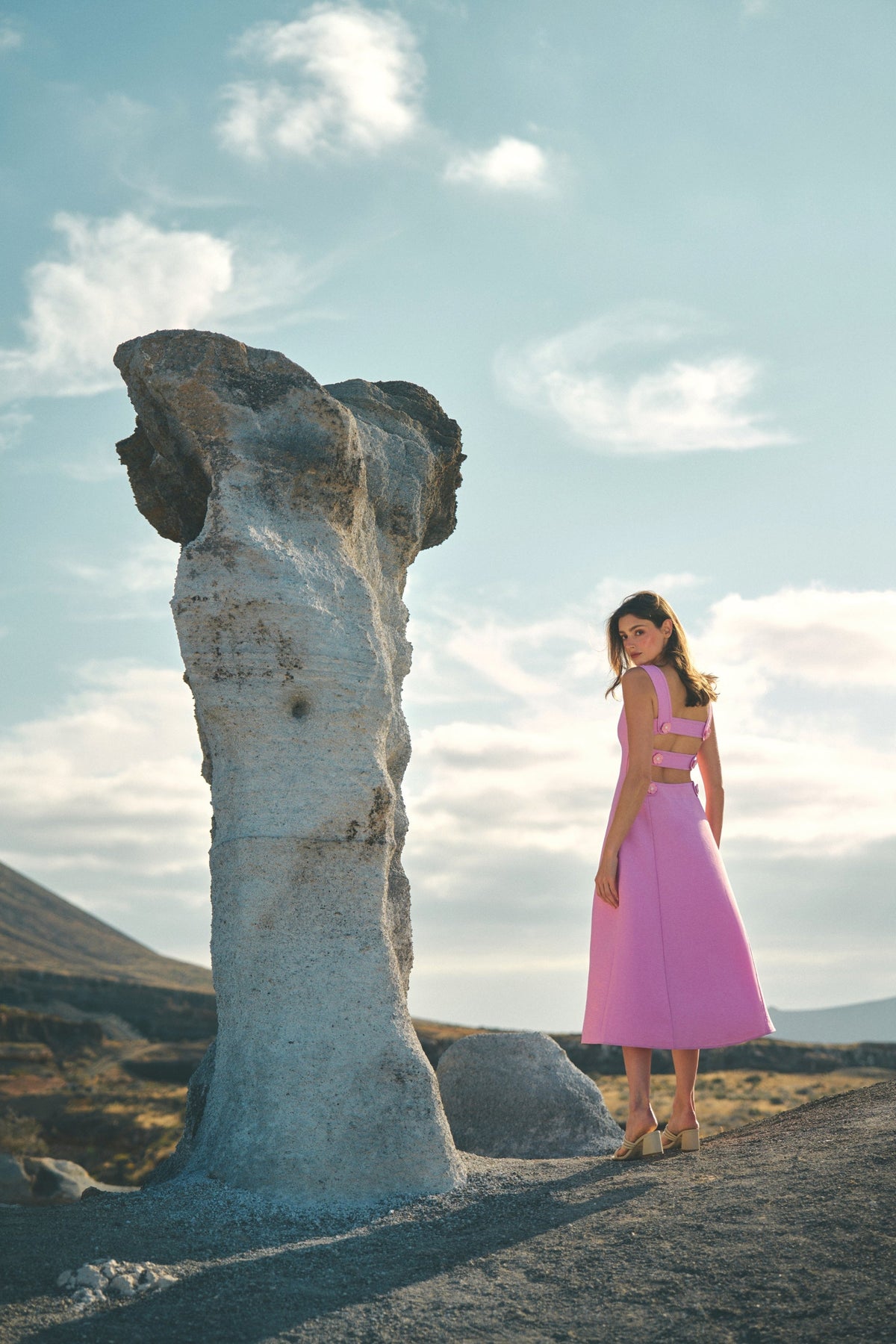
In burgundy velvet for autumn-winter, midnight-blue satin for a corporate event, or ivory crepe for a radiant ceremony: the fabric and shade make all the difference. Opt for streamlined cuts, open backs, slender straps, discreet necklines, slightly puffed long sleeves, and let the fabric’s drape do the work. A well-cut bustier, an asymmetrical line, a tulle detail, or a lightweight chiffon also allows you to vary the styles without leaving this formal register.
Split-hem styles also add a distinctly fashionable dimension to the silhouette: a skirt slit up one leg creates a sense of movement and lightness that works particularly well with a fluid, elongated cut.
The evening jumpsuit: the modern alternative to the dress
The jumpsuit has established itself as a genuine option, and deservedly so. It combines the freedom of movement of trousers with the elegance of a dressy outfit. In silk, velvet, or matte satin, it creates a silhouette that is modern, comfortable, and highly elegant.
It is an excellent gala outfit for the modern woman, particularly when looking for an alternative to a dress without sacrificing sophistication.
With a defined waist, an open back, a well-placed neckline, or carefully crafted sleeves, it fits perfectly into a gala dinner, an awards ceremony, or an elegant corporate evening.
The suit: chic, structured, and confidently embraced
The evening suit, with a structured blazer and fluid trousers in a luxurious fabric, is also an excellent option for a woman who prefers a more architectural silhouette. Chic, contemporary, and remarkably effective, it makes it possible to create a Parisian look Elegant and confident, particularly suited to formal evenings.
For a gala, a chic trouser ensemble benefits from attention to detail: a satin top under the jacket, an impeccable cut, slender heels, and an evening clutch. This is often what makes the difference between a dressed-up work outfit and a true evening outfit.
It is also a particularly suitable option for a corporate evening: elegant, comfortable, confident, without ever seeming overdone.
The cocktail dress: for more contemporary galas
For semi-formal events, a short or midi evening dress is perfectly suitable. A sequined design with a simple cut, a lace piece over a sheath dress, or an embroidered silhouette with a fluid drape: all are ways to dress up without overdoing it. It is often the right choice for a modern gala, a chic evening, or a professional event with a more relaxed dress code.
What matters is the coherence between the garment, the fabric and the accessories. A cocktail dress worn with beautiful shoes and a clutch sends a very clear signal: you are here, you are elegant, and you know exactly what you are doing.
For a contemporary gala, a satin midi piece, a wrap cut or a slightly shimmering piece may even be more appropriate than an overly ceremonious long dress.
How should you dress according to the atmosphere of the evening?
Classic and formal gala: opting for a structured gala outfit
This is the realm of long pieces and luxurious fabrics. Here, expectations are clearly defined. At a classic gala (prestige dinner, official ceremony, ball), there is no room for risk: formal gala attire is the natural choice.
This long cut remains the most suitable, and deep shades (black, midnight blue, burgundy, emerald green) work particularly well in this type of setting.
The details then make all the difference: embroidery, beads and carefully crafted finishes. Jewelry can be more prominent, provided the overall look remains cohesive. A single focal point is enough to avoid weighing down the silhouette.
Modern and contemporary gala
In a more modern gala, the atmosphere is freer and the dress codes are more relaxed.
You can opt for a midi dress, a jumpsuit or a chic trouser suit. The color palette can be more varied: champagne, gold, plum, royal blue, or even subtle prints. Of course, light blue, green and navy remain particularly elegant choices for this type of event.
What matters most here is not the level of formality, but the harmony of the silhouette. A well-cut outfit in an elegant fabric will always be more appropriate than an overly formal dress that feels out of step with the atmosphere.
It is often in this type of setting that people look for a chic, relaxed outfit for an evening, one that strikes the right balance between elegance and naturalness. A long-sleeved satin top paired with fluid navy trousers, for example, creates a very polished and fashionable silhouette without becoming overly formal.
Themed gala
Themed galas can be unsettling, but they also offer real freedom. The goal is not to adhere to the theme at all costs, but to draw inspiration from it intelligently. Adapt, have fun, but keep a guiding principle: elegance always takes precedence over a costume effect.
Rather than building your entire outfit around the theme, it is better to incorporate it through subtle touches: a color, an accessory, a cut or fabric detail that echoes it.
It is this subtlety that allows you to remain elegant while respecting the spirit of the evening. Going overboard undermines the look, while doing nothing can make you seem out of place.
As is often the case, it is all about balance.
4 style tips to shine at a chic event
Choose one statement piece without overwhelming the outfit
Everything should not attract attention at the same time. The idea is not to pile things on, but to choose one statement piece and build the rest around it.
If the piece is elaborate (sequins, embroidery, shiny fabric), the accessories should remain more understated. Conversely, a streamlined silhouette can accommodate more prominent jewelry or a bolder clutch.
It is this balance that creates an elegant, well-judged look that is never excessive.
Choose fluid, shiny fabrics
The choice of fabrics plays a central role in an evening outfit. Some naturally catch the light and immediately give the silhouette a more dressed-up dimension.
Satin, silk, velvet, and lace remain safe choices for a gala. Conversely, avoid materials that are too rigid or too matte: they lack visual depth in evening lighting.
This is often the detail that takes an outfit from “decent” to truly elegant.
Choose your colors and patterns carefully
Black remains a completely safe choice, but it is not mandatory. Burgundy, emerald green, midnight blue, silver, or champagne all make perfect sense in this context. For patterns, opt for restraint: an exclusive print in harmonious tones or delicate embroidery rather than an overwhelming pattern.
Adapt your outfit to your body shape and comfort
A successful outfit is not only about trends. It is an outfit in which you feel good. A well-defined waist, a detailed back or a balanced neckline, and a suitable length: these elements balance the silhouette effortlessly. A dress with a slit lengthens the leg, thin straps leave the shoulders bare, a well-designed neckline structures the bust, and sleeves can add balance.
Focus on what makes you feel comfortable, because comfort is just as visible as the outfit itself.
Take care with your hair and makeup
An elegant updo or loose hair with character, a bold lipstick, polished makeup in deep tones, or a well-groomed manicure: your hair and makeup are an integral part of your outfit. Think of them as the finishing detail that completes the look, not an optional addition.
Essential women's accessories to complete your outfit
Shoes: combining comfort and elegance
Pumps remain the standard, but evening sandals with slim heels work just as well, and are often better for staying on your feet all evening. The key is to choose shoes with a heel height you can genuinely wear.
This type of event often involves standing, moving around, and mingling. Uncomfortable shoes are immediately noticeable in the way you carry yourself.
Gold or silver sandals with a midnight blue or navy outfit, burgundy velvet pumps with a fluid silhouette: it's these simple, well-considered combinations that make all the difference.
Clutches and evening bags
The clutch is the signature accessory of a dressy outfit. Structured or soft, in satin, velvet, or gold-tone metal, it completes the silhouette without weighing it down. The idea is to remain consistent with the overall look: a simple clutch if the piece is already striking, or conversely, a more statement evening bag to liven up a more minimalist look.
Jewelry and embellishments: finding the right balance
Chandelier earrings, a delicate necklace, a cuff bracelet: jewelry is there to enhance, not compete with the outfit. If your piece is already rich in details, embroidery, sequins, elaborate sleeves, thin straps, it's better to stick to understated jewelry. Conversely, a streamlined outfit allows for more freedom. With an outfit consisting of a skirt or trousers, these details become even more important.
A stole, a chiffon top, or gloves can also complete a silhouette, particularly for the most formal events.
Coats and complementary pieces
For an evening event, a silk stole or a long coat with a polished cut is often more appropriate than a bomber jacket or a city jacket. Think about leaving as much as arriving: the silhouette should remain cohesive from head to toe, even outside.
What we always wonder before a major event
Can you be overdressed for a gala?
Yes, and it's even more common than you might think. An overly imposing outfit in a more relaxed setting can create a mismatch.
At a corporate evening or a contemporary event, an overly formal silhouette can seem excessive. Elegance often lies in getting it right, not in the level of sophistication.
How can you tell whether an outfit is elegant enough?
A good indicator: the fabric and the cut.
A well-cut piece in a fluid or slightly shimmering fabric will always be more elegant than an overly busy outfit with poor structure. If the overall look is cohesive and comfortable, it's generally the right choice.
Do you have to wear heels?
No. Heels remain a classic option, but they aren't essential.
Low-heeled sandals, moderately high pumps, or even certain elegant flats can work perfectly well, provided the overall look remains harmonious.
Do you have to follow a gala's theme?
No, and that's good news. The theme is an invitation to play, not an obligation. Most women who handle the exercise best don't dress up: they incorporate a subtle reference into their outfit and let the rest breathe.
A shade that recalls the theme’s palette, an accessory that echoes it, an embroidery detail, or a subtle print is often enough to capture the spirit without losing your personal style. The real mistake would be to interpret the theme too literally and sacrifice elegance for the concept. Remember: elegance is the art of suggestion.
How can you avoid looking too much like you are in costume at a themed gala?
The simplest approach is to keep it suggestive.
Rather than building the entire outfit around the theme, it is better to incorporate one detail: a color, a fabric, or an accessory. This allows you to capture the spirit of the theme without losing your elegance.
Should the outfit be long or short?
This is often the first question, and the answer is less clear-cut than you might think. For a very formal event with a black-tie dress code, a floor-length style remains the standard: it naturally conveys a certain elegance and meets protocol expectations. But it is not an absolute rule.
For a more contemporary or semi-formal setting, a well-chosen midi length or short silhouette can achieve exactly the same level of elegance. What really makes the difference is the fabric, cut, and accessories. A velvet midi piece with delicate sandals and a gold clutch says just as much as a poorly cut long polyester outfit. Think first about what flatters you, then about the length.
Can you wear trousers instead of a dress?
Absolutely, and this option is now widely accepted, including in the most formal settings. An evening suit or a dressy jumpsuit offers a truly elegant alternative, provided, as always, that you pay close attention to the fabric and accessories.
Flowing navy or black trousers paired with a long-sleeved satin top, delicate sandals, and a structured clutch: the silhouette is instantly dressed up, modern, and incredibly chic. It is also a particularly comfortable option for evenings that go on for hours. And for women who do not feel comfortable in a long dress, it is often the best decision they can make. An ideal alternative for those who want to move beyond more classic clothing.
What is the most common mistake in a gala outfit?
Trying to do too much.
Accumulating details, shiny fabrics, statement jewelry, and bold accessories can quickly weigh down the silhouette. A successful outfit often relies on a simple, well-balanced approach.
Looking for the perfect outfit for your next event? Discover Leo & Ugo’s selection of evening and formal dresses: pieces designed in Paris, with carefully crafted artisanal finishes, to accompany you elegantly on all your special occasions.